Home Sweet Home
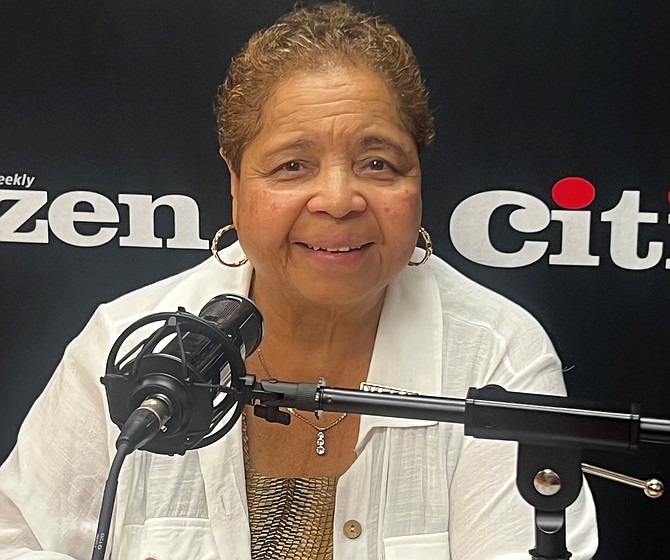

Home Sweet Home
By Brenda A. Sheriff, CSA
Let me ask you a question: When you get older, where do you want to live?
Now, if you are like most folks that I know, including myself, your answer is probably: “Right here in my own home!”
There is something comforting about home. It is where so many of our memories were made. Memories of raising our children, celebrations galore, entertaining friends, and experiencing both sad and joyous occasions. Yes, home is where we prayed, cried, laughed, and filed away so many memories. It is where we feel most comfortable. It’s OUR home, and it brings comfort.
Yet somewhere along the way, in our society, folks think that growing older automatically means leaving and losing the comforts of home.
It doesn't have to be.
Aging at home, or “aging in place,” is the idea of remaining in your own home and community as you grow older, while putting the people, services and changes in place that can help you continue to live safely and comfortably.
I encourage families to have these conversations before a crisis hits. As a matter of fact, I just had this conversation with my one and only son, who lives over a thousand miles away. So, this issue is VERY up-close and personal to me.
Aging at home doesn't mean that you will never need help.
It means planning now for the help you may need while you still have choices.
Someday you may need someone to help with housekeeping. You may need transportation to the doctor, someone to prepare meals; assistance with bathing or dressing, or simply someone to check on you each day.
We are very blessed to have technology today to become part of the solution. Medical alert systems, medication reminders, telehealth and other tools can provide additional support as you age in place.
And then there is the house itself.
As we age, the same home that served us well for decades may need a few changes. Better lighting, grab bars, handrails, a walk-in shower, improved accessibility, or modifications to stairs can sometimes make the difference between being able to remain safely at home and having to leave it.
The important thing is to think about these things before you need them.
I did this when my parents agreed to move with me. It was a blessing to find a home to purchase that would better serve “our” respective needs, directly across the street from where they had lived for nearly forty years. God is good. They were not uprooted from the community, friends, and daily routines they enjoyed.
My story with my parents is very uncommon. Few people, including myself, will be blessed to simply move across the street. However, we can work with our adult children to make plans that will keep us safe and give them the assurance that our needs are being met.
It is neither simple nor easy, but necessary.
Being a Certified Senior Advisor (CSA) is now giving me an opportunity to take a dose of my own medicine. Yes, as I continue to emphasis in this column, all life issues should be considered as a family affair. It’s an opportunity for family to sit around the table while everyone is still able to participate and discuss who can help, what kind of help may be needed, what changes may need to be made to the house, who will help coordinate medical care, what legal documents should be in place and, perhaps the biggest question of all: How are we going to pay for the help that may be needed?
These conversations may not always be comfortable, but they can prevent confusion and family disagreements later.
We also need to look at aging at home from the perspective of our healthcare and elder-care systems.
The huge population of “Baby Boomers” are getting older and living longer. Going forward, there will be tremendous demand for hospitals, nursing homes, assisted living, home health agencies, caregivers, and other services.
Institutional care can be appropriate and, in some circumstances, necessary. But it should not automatically be the first answer simply because someone has reached a certain age. Both former presidential candidate Kamala Harris and, in his first campaign, Governor JB Pritzker advocated “Aging in Place.” (Where are you now JB?)
My suggestion is that we, as a Black community, should be forward-thinking as families and entrepreneurs, working together to support “Aging in Place.”
That could mean bringing more services into our neighborhoods and homes—home health care, personal assistance, meal programs, transportation, telehealth, adult day programs and home-safety improvements. Heads up! This can definitely mean more opportunities for the economic development of Black-owned businesses and, therefore, jobs for Black folks.
It could mean that we, as older adults, are not simply a “patient,” but a person with a home, a history, preferences, and a voice in the decisions being made about our lives. Retaining ownership of real estate in our communities is especially important because property is too often lost when elders are placed in institutions.
Aging at home may not be the right answer for everybody. There may come a time when a person's medical or personal- care needs require a different level of care.
But shouldn't we determine that based on need, rather than simply on age?
That is why I encourage families to start the conversation early.
Don't wait until there is a crisis. Don't wait until a doctor says, “You can't live alone anymore.” And don't wait until the family is sitting in a hospital waiting room trying to make a life-changing decision in the middle of a crisis.
Ask the question now:
“What would it take for me - or someone I love - to remain safely at home as long as possible?”
That question can open the door to possibilities you may never have considered, especially if you are the person who is uncomfortable with a proposed move.
Growing older is a blessing. But blessings come with responsibilities. We have a responsibility to prepare for the years ahead, to protect the independence we value and to make thoughtful decisions while we still can.
So, let's get our houses in order - not just financially, legally, or physically, but with a plan for how we want to live as we grow older.
Would you like to explore with me the possibility of aging at home for yourself or someone you love? I invite you to call me to hear my plan. Sometimes the first step toward a better future is simply understanding what is needed today to stay in your Home Sweet Home tomorrow.
THIS WEEK'S QUIZ: When can an Affidavit of Heirship be used?
Answer to Last Week's Quiz: Last week’s quiz asked for your favorite memory from the good ol’ days. I hoped you enjoyed going down memory lane.
For Questions or Help: 773-817-0601 basheriff1@gmail.com
Disclaimer: The illustrations and examples presented in this column are not, nor are they intended to be, legal, financial, tax, insurance, or other licensed professional advice. Readers should consult the licensed professional of their choice regarding their individual circumstances.
Latest Stories
- Bally’s Chicago Marks Three Years with $30,000 in Donations to Local Nonprofits
- The public is invited to celebrate the grand reopening of the newly renovated Malcolm X College West Campus and Danny K. Davis Community Center
- While Black Families Pay More for Power, Some Attorneys General Fight to Save High-Cost Coal
- Rotary Clubs Unite for the World’s Largest Polio Walk on World Polio Day
- The Inner Circle acknowledges Asia Alexus Alexander as a Pinnacle Professional of The Year
Latest Podcast
Memories of being a Preachers Kid