Prattling of An Old Woman Part Two: Building the Future Together

Prattling of An Old Woman
Part Two: Building the Future Together
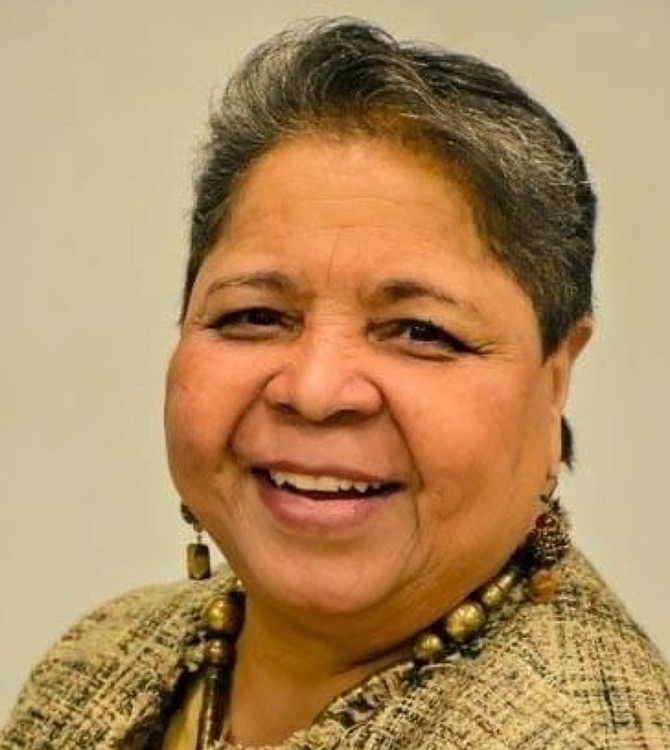
By Brenda “Bren” Sheriff, CSA
In Part One, we explored the critical pillars of political engagement, economic empowerment, and health and wellness. Now we turn to the foundations that complete our blueprint: education, housing stability, social accountability, and the enduring spirit that has always carried us, as a people, forward.
Education remains one of the most powerful equalizers, but it must go beyond standardized testing, it must provide some life skills.
Public education has been one of the greatest advantages we have been entitled to receive since the Supreme Court’s Brown v. Board of Education decision 71 years ago. Since that ruling, Black students—more than at any time in our history—have been provided the opportunity to receive stronger preparation in science, technology, engineering, mathematics, finance, communication, critical thinking, and skilled trades.
The education of our children is not solely the responsibility of the schools; parents and grandparents also have a role. Reading to children, monitoring assignments, limiting excessive social media exposure, and encouraging curiosity can significantly influence the educational outcomes in our communities.
Mentorship programs are equally important. Young people benefit when they see successful professionals, entrepreneurs, tradespeople, educators, and civic leaders who look like them and understand their experiences. The NAACP’s ACT-SO Program provides an excellent opportunity for high school youth to gain exposure to various cultural, technical, and scientific careers while competing for scholarships.
We should also support our historically Black colleges and universities, apprenticeship programs, and vocational training opportunities that create pathways into stable careers assuring the economic stability our communities deserve to thrive.
Stable housing is directly connected to education, health, safety, and economic advancement which create good homes to stabilize families.
We continue to face challenges involving affordability, property tax increases, displacement, predatory lending, and inherited property disputes, but help is on the way.
Financial counseling for first-time homebuyers, cooperative housing models, community land trusts, and estate planning that protects family property from forced sales or legal confusion are all tools available to us. If we need help finding information or counseling, we should not hesitate to reach out to both public and private agencies. Call me, I can provide you with contact information for counseling.
Vacant lots and abandoned buildings should be viewed as redevelopment opportunities rather than permanent symbols of decline. In Chicago, some of these lots are available for as little as $1.00 to qualified buyers.
Strategic partnerships involving nonprofits, developers, faith organizations, and community groups can help create affordable housing while preserving neighborhood identity. We can call our aldermanic offices to learn more about planned housing in our wards.
Ownership matters because people are more likely to invest time, resources, and care in communities where they have a stake. There are still homebuyer assistance programs available that will help us become credit-worthy and provide down-payment assistance.
We must be honest with ourselves: some of the problems our communities face cannot be blamed entirely on outside systems. Taking a page from the Isley Brothers—“It’s your thing, do what you want to do”—individually and collectively, we control the internal issues that plague our communities, including violence, fractured families, declining civic participation, and distrust. Yes, we must also address our “stuff” honestly.
Individually and collectively, when our expectations rise, our communities become more unified and grow stronger.
Taking a page from Queen Aretha, “respect” for education, work ethic, family stability, conflict resolution, and civic involvement should be reinforced consistently. It should be our primary focus.
Young people need safe spaces, mentorship, structure, and opportunity. Our communities must support programs involving arts, athletics, entrepreneurship, technology, and leadership development. It takes a village—so let us engage with that village, becoming part of the solution rather than simply cursing the problem.
At the same time, media literacy is essential. Too much of modern culture rewards division, materialism, outrage, and destructive behavior while minimizing discipline, scholarship, and service. We must stop wasting time on foolish, nonproductive activities. Time is our most valuable commodity—it is irreplaceable.
Our communities must intentionally celebrate achievement, integrity, and contribution. Let us initiate a community, common-interest, one-love activity in our building, on our block, or—better yet—within our own families.
There is no single policy, election, protest, or program that will solve every challenge facing us. Real progress requires sustained effort across multiple generations and disciplines. Let’s just do it!
Our history demonstrates that our ancestors concentrated on building our enduring institutions: businesses, churches, schools, civic organizations, and movements under conditions no less difficult than those we face today. And still we rise!
The future will depend on whether our communities move from reaction to preparation, from compliance to resistance, from indifference to commitment. There is nothing to it but to do it! We must prepare ourselves to always be prepared.
Political engagement, economic ownership, health awareness, educational excellence, housing stability, and social accountability are not isolated goals. They are interconnected fundamentals that determine our quality of life and the lives of those yet to be born.
No community rises permanently without discipline, strategy, and unity. If we keep doing what we’re doing, we’re going to keep getting what we’ve got. I don’t know about y’all, but like Fannie Lou Hamer, I’m sick and tired of being sick and tired of too many of us doing nothing to effect change.
The obstacles are real. But so is our capacity to overcome them. If we want to have better, we must do better. Let’s come together intentionally to make changes in our lives for the better now, today. We cannot afford delay building the future together.
This has just been the prattling of an old woman, hoping that our working together can make our communities better. If it is to be, it is up to you and me – we owe it to each other.
THIS WEEK’S QUIZ: True or false: adding your child to the deed is always the best way to avoid probate.
Answer to last week’s quiz: Probate can be avoided with a trust.
For Questions or Help: 773-817-0601 or basheriff1@gmail.com
Disclaimer: The illustrations presented in this column are not, nor are they intended to be, legal, financial, or any other licensed professional advice, you should contact the licensed professional of your choice for advice on your individual situation.
Latest Stories
- Howard Brown Health Marks National PrEP Day by Encouraging Whole-Person Approach to HIV Prevention
- MAYOR JADA D. CURRY CONTINUES TO PROPEL LYNWOOD INTO A TREMENDOUS DESTINATION POINT OF THE SOUTHLAND
- HIP-HOP LEGENDS SCARFACE, TOO SHORT AND DO OR DIE ARE COMING TO HARD ROCK LIVE NOV 20
- Good Soil Forum Returns to Award $500,000 to Entrepreneurs and Founders Ready for Growth
- Lisa Price, Tokyo Stylez, Olamide Olowe, Cornell McBride Sr. and More to Be Honored at 2026 Bronner Bros. Beauty Icon Awards
Latest Podcast
Learning To Live Life Correctly By Knowing Your Blood Type