Oh What Needless Pain We Bear…

Oh What Needless Pain We Bear…
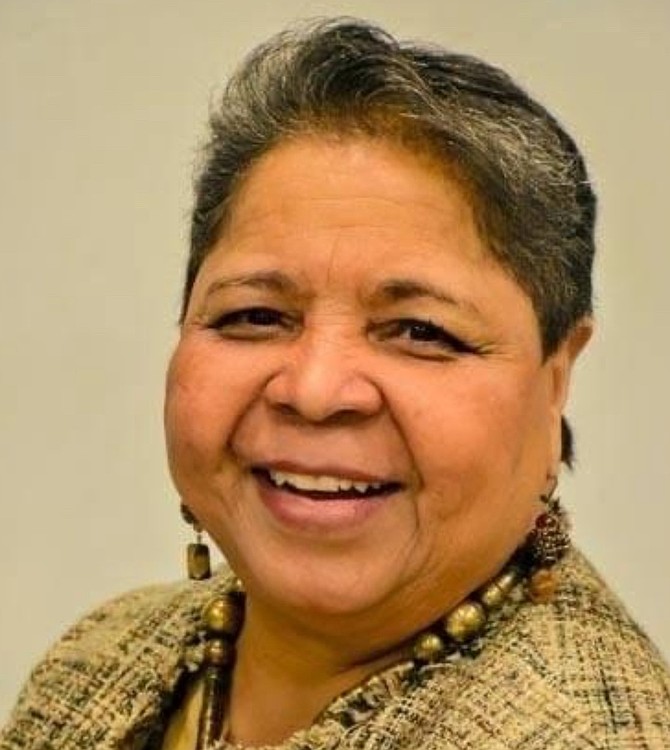
By Brenda “Bren” Collins-Sheriff, CSA
This week, the oldest, boldest, most revered—and at times most feared—civil rights organization in America, the National Association for the Advancement of Colored People (NAACP), hosted its 117th National Convention here in Chicago. Unfortunately, because of my newspaper deadline being the first day of the convention, I cannot give you a full report. I can say, however, that the seminars listed in the convention program appear to be both timely and promising. Stay tuned—I look forward to sharing highlights and observations in a future column.
As many of you know, this column is dedicated to providing information, instruction, and encouragement to seasoned citizens in hopes of making life's journey lighter and our futures brighter. I often remind readers that, just as no instruction manual is handed to us when we become parents, no manual arrives when we enter the later seasons of life. We learn through experience, and if we are wise, we also learn from the experiences of others.
My father once shared a lesson that has stayed with me throughout my life. He said the true sign of wisdom is recognizing that none of us will live long enough to make every mistake ourselves—and recover from it. Therefore, wise people profit from the lessons learned through the mistakes of others.
One lesson I have observed repeatedly is that too many people, particularly older adults in the Black community, carry emotional wounds for years without seeking help. Those wounds take many forms. They may stem from childhood trauma, broken relationships, financial hardship, discrimination, loneliness, caregiving responsibilities, or the death of someone deeply loved. Whatever their source, unresolved emotional pain often robs people of the peace, joy, and fulfillment they deserve during their senior years. It can actually shorten lives.
The unfortunate reality is that there remains a stigma in many Black families surrounding professional counseling and mental health services. Too often, seeking help is viewed as a sign of weakness rather than a demonstration of wisdom and courage. As a result, countless seniors suffer in silence, believing they simply have to 'live with it.'
People of faith possess an extraordinary advantage. The late Rev. Jesse Jackson often reminded us to 'Keep Hope Alive.' Likewise, the late Rev. Dr. Johnnie Coleman frequently taught, 'Nothing can happen to you unless you let it happen through you.' Although expressed differently, both messages point us toward the same truth: we have greater power over our responses than we sometimes realize.
Each day we make choices about what we will think, believe, and focus upon. We cannot always control what happens to us, but we can influence how we respond. Scripture reminds us to 'call those things which be not as though they were,' encouraging us to envision a better future even when present circumstances seem overwhelming.
That does not mean we must face every burden alone. Sometimes healing requires prayer. Sometimes it requires supportive family and friends. Sometimes it requires both. And sometimes God provides healing through trained counselors, therapists, grief specialists, or support groups. Seeking professional help should never be viewed as a lack of faith. Rather, it can be an act of faith—using every resource God has placed within our reach.
With every choice comes an outcome. If your choices are leading you toward a happier, healthier, and more fulfilling life, continue on that path. But if you find yourself trapped in sadness, anxiety, bitterness, or despair, perhaps it is time to make a different choice. As the saying goes, 'Your attitude determines your altitude.' Change your thinking, and you often begin changing your life. Living life to its fullest is ultimately an inside job, and counseling may be one of the tools that helps steady your ship during life's rough waters.
For that reason, I believe our churches can play an even greater role in helping people heal emotionally as well as spiritually. Churches exist to minister to the living, equipping people to face life's daily challenges with hope, wisdom, and practical support.
I am grateful that my church, Christ Universal Temple, recently presented a seminar entitled Mental Health and Metaphysics: A New Thought on Eternal Life and Grief. My sincere thanks to Rev. Dr. Jacqueline Triche Atkins, Rev. Valarie McGee, and Dr. Veronica Walker-Douglas for leading such a thoughtful, informative, and compassionate discussion.
My hope is that more churches throughout our community will begin offering similar programs. Emotional wounds deserve the same attention as physical ones. It is my opinion that churches are for the living and therefore should be ministering and providing information in a very practical way to their congregants who may be struggling with the personal issues of life. If they do, perhaps fewer of our brothers and sisters will continue to carry what the old hymn so beautifully describes as, "Oh, what needless pain we bear."
There is no shame in seeking help to heal. In fact, choosing to heal may be one of the wisest decisions we ever make—for ourselves, our families, and the generations who follow us.
THIS WEEK'S QUIZ: What impact does poor mental health have on longevity in the Black community?
Answer to Last Week's Quiz: The minimum age to apply for an FHA insured reverse mortgage is 62.
For Questions or Help: 773-817-0601 basheriff1@gmail.com
Disclaimer: The illustrations and examples presented in this column are not, nor are they intended to be, legal, financial, tax, insurance, or other licensed professional advice. Readers should consult the licensed professional of their choice regarding their individual circumstances.
Latest Stories
- Bally’s Chicago Marks Three Years with $30,000 in Donations to Local Nonprofits
- The public is invited to celebrate the grand reopening of the newly renovated Malcolm X College West Campus and Danny K. Davis Community Center
- While Black Families Pay More for Power, Some Attorneys General Fight to Save High-Cost Coal
- Rotary Clubs Unite for the World’s Largest Polio Walk on World Polio Day
- The Inner Circle acknowledges Asia Alexus Alexander as a Pinnacle Professional of The Year
Latest Podcast
Memories of being a Preachers Kid