The Night Ministry Continues To Show Compassion To Those Experiencing Homelessness
The Night Ministry Continues To Show Compassion To Those Experiencing Homelessness
By Tia Carol Jones
The Night Ministry was founded in 1976 as a way to respond to the crisis of isolation, despair and homelessness that people on the streets of Chicago were experiencing at night. According to David Dodd, Director of Marketing and Communications for the Night Ministry, the goal was to meet people where they were: in alleys, bars, all-night restaurants, street corners, and provide human connection, compassion, and dignity to people often overlooked by society.
From that radical but straightforward act of presence; acknowledging people’s humanity when they felt invisible — The Night Ministry began its long journey of offering human connection, health care, and housing to Chicago’s unhoused and most vulnerable residents. Dodd took time to answer some questions for the Citizen Newspaper.
Citizen: Since it began, how many people has The Night Ministry served?
NM: The Night Ministry has reached tens of thousands of people since its inception. More concretely, last year, The Night Ministry served more than 5,400 individuals experiencing homelessness or poverty through its health and housing programs and outreach services.
Citizen: What are some of the ways The Night Ministry helps those who are unhoused?
NM: The Night Ministry offers a range of integrated programs and services designed not just to meet immediate needs, but to support long-term stability, dignity, and connection:
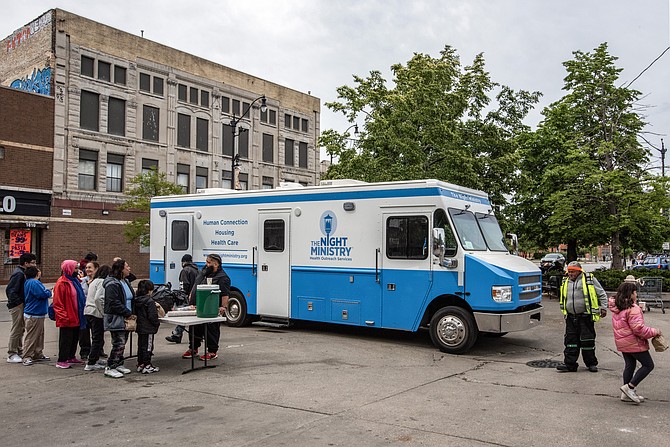
Mobile health care & outreach: Through its Health Outreach Bus (and other outreach vehicles), The Night Ministry delivers free, accessible medical care directly to neighborhoods, tent encampments, transit stops, and other places where unhoused folks may spend time — reaching people who may otherwise have no access to care.
Food, hygiene, and essential supplies: Staff and volunteers distribute meals, hygiene kits, clothing, and other essentials.
Youth and young adult housing & shelter programs: The Night Ministry runs dedicated youth-focused housing services, including overnight shelter (e.g., a program called The Crib), short-term “Interim” housing, long-term transitional living (e.g., Pathways Transitional Living Program), and flexible housing subsidies to help young people ages 14 years old to 24 years old, — including parenting youth — to move toward stability and independence.
Supportive services beyond shelter: For youth in any of the housing programs, The Night Ministry offers life-skills coaching, leadership development, recreational and community-building activities, case management, advocacy, and connections to other social services — aiming to help them not just survive but thrive.
Advocacy and outreach to marginalized subpopulations: Through street-based outreach, the organization meets people; including LGBTQ+ individuals, young adults, and others often excluded from traditional shelter systems — providing affirming care, a nonjudgmental presence, and pathways to support.
Citizen: Why do you think the services The Night Ministry provides are so vitally important for the people who need them the most?
NM: For many individuals — especially those who are unhoused — traditional social systems and services are often inaccessible, stigmatizing, or not designed to reach them where they are. The Night Ministry’s approach — rooted in humanity and dignity — compensates for that gap in several critical ways:
Meeting people where they are: By offering mobile health care, outreach on the streets, transit hubs, and neighborhoods, The Night Ministry reaches individuals who might otherwise be completely isolated or excluded from services. This “street-level” approach reduces barriers like transportation, ID, documentation, or mistrust that often prevent people from accessing help.
Restoring dignity and humanity: Many people who experience homelessness are dehumanized by society; ignored, criminalized, or treated as invisible. The Night Ministry’s model of “human connection first” offers compassion, respect, and understanding. Even something as simple as listening, offering warmth, or providing a meal can reaffirm someone’s value and worth.
Preventing health crises and expensive emergency care: By bringing primary care, preventive services, and medical outreach directly to people, The Night Ministry can prevent serious health problems; saving lives, reducing emergency room visits, and lowering long-term costs for individuals and public systems.
Creating pathways out of instability: For youth, especially, providing stable housing, supportive services, life-skills training, and community can be life-changing — turning a moment of crisis into a foundation for long-term stability, self-sufficiency, and hope.
Filling systemic gaps: Many unhoused individuals fall through the cracks of traditional “shelter-first” or institutional-based systems, whether because of age, documentation status, substance use, mental health, identity (LGBTQ+), or simply because programs are full. The Night Ministry’s flexible, client-centered, and inclusive model offers an alternative rooted in equity, compassion, and respect.
Citizen: How would you say the mission has expanded or changed since The Night Ministry began?
NM: In the almost 50 years that The Night Ministry has been in existence, its mission hasn’t changed at its core: providing human connection, healthcare, and housing. We continually review and evaluate the scope, scale, and implementation of our programs and services to ensure they meet the complex, changing needs of Chicago’s unhoused population.
Citizen: What do you think people get wrong about people who are unhoused?
NM: That unhoused people are “choosing” their situation or are responsible for it, when in fact many have experienced systemic poverty, trauma, lack of affordable housing, mental health challenges, or have been excluded from opportunity.
- That unhoused people don’t want help. In contrast, many want connection, dignity, stability, and access to services; they need a compassionate, nonjudgmental bridge.
- That they are “all the same." In reality, unhoused populations are diverse: youth, families, LGBTQ+ individuals, seniors, people with chronic illnesses or disabilities, and people of all races/ethnicities. Their needs, backgrounds, strengths, and dreams are varied.
- That shelter or a bed solves the problem entirely. Without health care, social support, case management, advocacy, and long-term housing support, a bed alone may not lead to stability. Real, lasting change requires holistic, wraparound support.
- That once someone becomes housed, all problems are solved. Even after someone is housed, many will need ongoing support and resources to navigate life, healing, and rebuilding.
Citizen: How can people and the community support the work that The Night Ministry is doing?
NM: There are many meaningful ways individuals, groups, and the broader community can support The Night Ministry:
- Donate: Financial contributions help underwrite the cost of mobile health care, shelter operations, housing subsidies, food and hygiene distribution, outreach, and supportive services.
- Volunteer: Help with meal distribution, outreach bus, youth housing programs, donation drives (clothing, hygiene supplies), and more. Volunteers often play a critical role in building trust, offering companionship, and delivering services directly.
- Advocate & raise awareness: Speak out about the need for housing as a human right, challenge stigmas, support policies that expand affordable housing, health care access, and resources for unhoused people. Engage with your community, networks, and platforms.
Show compassion and human dignity in daily interactions: Even small acts — conversation, kindness, respect — can contribute to restoring dignity, reducing isolation, and combating social invisibility.
Citizen: Where can people go to find out more about The Night Ministry?
NM: People can donate, register to volunteer, and learn more at The Night Ministry’s official website: www.thenightministry.org. For mailing or direct contact: The Night Ministry’s headquarters is at 1735 North Ashland Avenue, Suite 2000, Chicago, IL 60622. Phone: 773-784-9000.
Latest Stories
- HARD ROCK CASINO NORTHERN INDIANA DONATES $15,000 TO SOJOURNER TRUTH HOUSE
- South Suburban College Men’s Basketball Wins Midwest Region 4B District Championship; Advances to NJCAA National Tournament
- City of Gary Announces Major Donation from Hard Rock Casino Northern Indiana to Support New Gary Animal Care Facility
- RAVINIA FESTIVAL ANNOUNCES ITS MILESTONE 2026 SEASON, FEATURING THE INAUGURATION OF THE UPDATED AND REDESIGNED HUNTER PAVILION
- Chicago Teachers Union Members Vote to Join National Day of “No School, No Work, No Shopping” on May 1st
Latest Podcast
Reverse Mortgages