From Breadbasket to the Rainbow
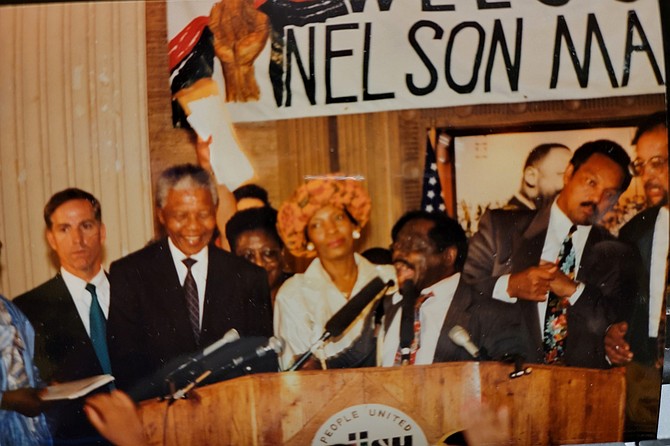
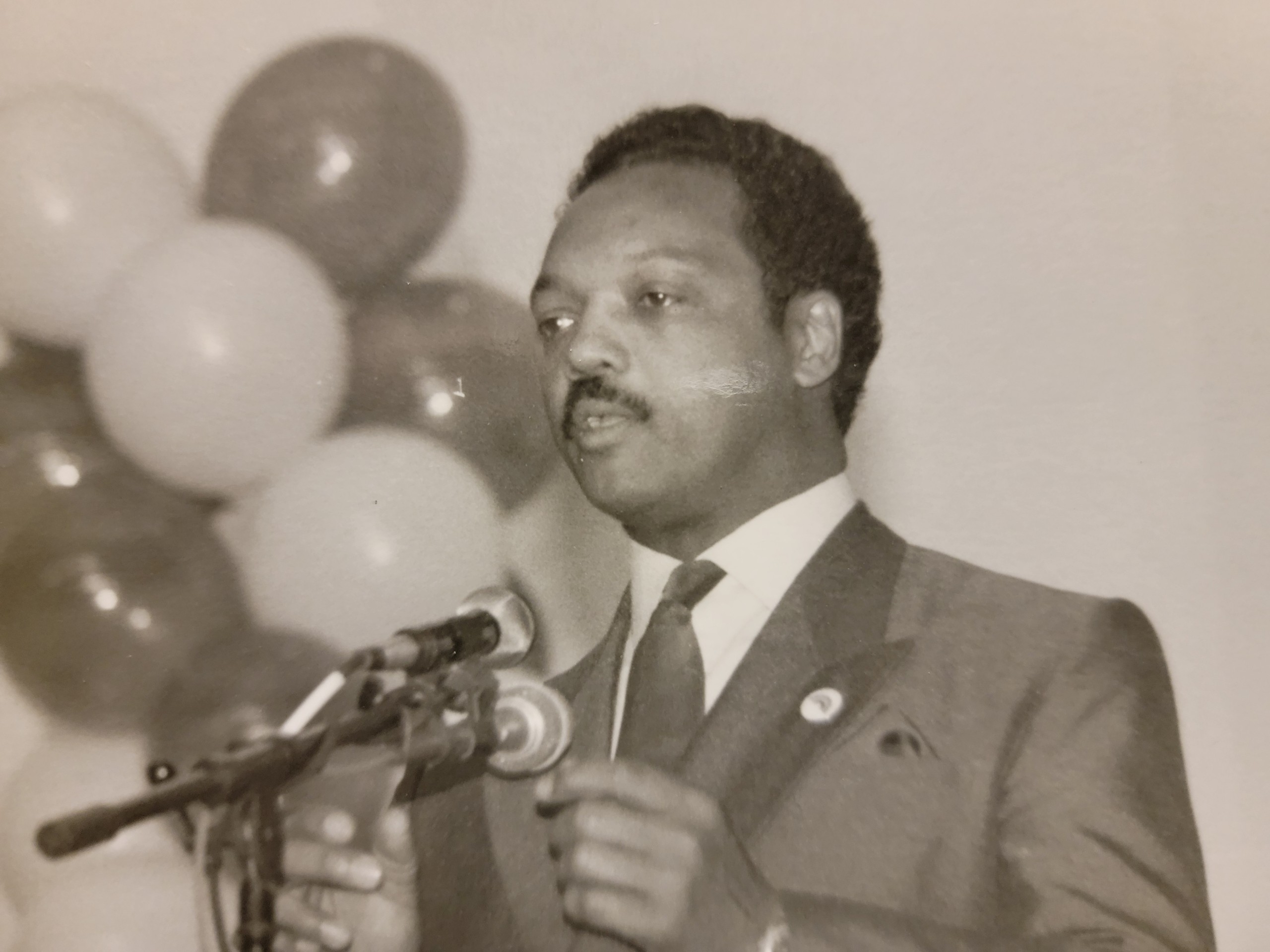 Rev Jackson speaks to crowd during an event in Chicago. Photo by Lisa Ely
Rev Jackson speaks to crowd during an event in Chicago. Photo by Lisa Ely
From Breadbasket to the Rainbow:
The Economic Justice Journey of Rev. Jesse L. Jackson
By Lisa Ely
Past Citizen Editor
From 1985 to 1996
Before the presidential campaigns. Before the Rainbow Coalition. Before the global diplomacy and Presidential Medal of Freedom — there was a basement in Chicago, a handful of ministers, and a bold idea: economic power could be organized.
Rev. Jesse L. Jackson’s national profile would eventually span continents, but his economic justice framework began in the crucible of the Civil Rights Movement — under the mentorship of Dr. Martin Luther King Jr. and the Southern Christian Leadership Conference (SCLC).
The Chicago Shift: Civil Rights Meets Economic Power
In 1965, as Dr. King expanded the Civil Rights Movement northward, Jesse Jackson emerged as a key young organizer in Chicago. Following the Selma voting rights marches, Jackson joined King’s strategy to confront economic exploitation in Northern cities.
By early 1966, Dr. King publicly introduced SCLC’s Operation Breadbasket concept in Chicago — a strategy aimed not merely at protest, but at restructuring economic relationships between Black consumers and corporate America.
Breadbasket’s method was precise and strategic:
Investigate hiring practices.
Demand fair employment.
Leverage Black consumer spending power through selective buying campaigns.
Within months, ministers were organized into committees targeting dairy companies, grocery chains, and soft drink corporations. When Country’s Delight Dairy refused negotiations, Breadbasket launched a boycott. Within weeks, the company agreed to hire 44 additional Black employees — the first major Chicago victory.
Agreements followed with Borden’s, Hawthorn-Mellody, Pepsi-Cola, and Coca-Cola. Breadbasket had proven that economic withdrawal could produce measurable employment gains.
This was not symbolic protest — it was structured negotiation backed by consumer leverage.
By November 1966, Dr. King appointed Rev. Jesse L. Jackson as SCLC’s Director of Special Projects and Economic Development — formalizing his leadership role in the movement’s economic arm.
From Protest to Institution: The Birth of Operation PUSH
After Dr. King’s assassination in 1968, the movement faced uncertainty. Jackson carried forward Breadbasket’s economic philosophy, expanding it beyond negotiation into institutional development.
By 1971, he formally founded Operation PUSH — People United to Serve Humanity.
Operation PUSH broadened the focus:
Corporate accountability
Black entrepreneurship
Educational opportunity
Political empowerment
Voter registration drives
The organization became both a civil rights advocacy body and an economic negotiating force.
In 1969, Jackson launched the first Black Expo in Chicago — spotlighting Black-owned businesses. Campaigns against hunger and for job access continued the Breadbasket philosophy but with expanded scale.
Operation PUSH redefined civil rights activism by shifting from street protest to boardroom negotiation.
Expanding the Movement: The Rainbow Coalition
By the early 1980s, Jackson’s work evolved from targeted economic campaigns to national coalition building.
In 1983, the Southern Crusade voter registration drive helped register more than 3 million new voters. That same year, Jackson announced his candidacy for President of the United States.
His 1984 Democratic National Convention speech — “Our Time Has Come” — introduced the language of the “Rainbow” as a political metaphor: a coalition of minorities, labor, farmers, the poor, and those marginalized by economic systems.
In December 1984, the National Rainbow Coalition was formally established.
The Rainbow vision connected:
Economic justice
Voting rights
Labor equity
International human rights
Anti-apartheid activism
Trade equity
Corporate inclusion
Jackson’s work extended globally — negotiating hostage releases, advocating against apartheid in South Africa, meeting world leaders, and engaging multinational corporations through the Wall Street Project.
What began as selective buying in Chicago evolved into structured corporate covenant agreements with Fortune 500 companies.
The Strategic Thread
From Operation Breadbasket to Operation PUSH to the Rainbow Coalition, a consistent philosophy emerges:
Economic access is civil rights.
Jackson’s strategy did not abandon protest — it refined it into negotiation. It did not reject corporate America — it engaged it. It did not isolate racial justice — it broadened it into economic inclusion.
Breadbasket proved that consumer power could force employment commitments.
PUSH institutionalized economic advocacy.
The Rainbow Coalition expanded it into a national political framework.
Legacy of the Economic Model
The early Chicago campaigns demonstrated that:
Hiring practices could be audited.
Corporations could be pressured into transparency.
Black consumer dollars had measurable leverage.
That model would later influence:
Corporate diversity agreements
Minority contracting initiatives
Voter mobilization efforts
Economic empowerment policy proposals
By the late 1990s and early 2000s, Jackson’s initiatives had expanded into venture capital funds, global trade advocacy, and presidential advisory roles.
In 2000, he was awarded the Presidential Medal of Freedom.
A Legacy Recognized Around the World
Over the course of his lifetime, Rev. Jesse L. Jackson Sr.’s moral leadership and civil rights advocacy have been recognized not just across America — but across the globe.
In 2007, he was named an Honorary Fellow of Regent’s Park College at Oxford University in the United Kingdom — a distinction reserved for individuals whose public service and scholarship have made global impact. That same year, Edge Hill University in Liverpool conferred upon him an honorary fellowship in recognition of his lifelong fight for equality and justice.
By 2010, his influence extended into some of the world’s most historic academic and intellectual institutions. He was inducted into the prestigious Cambridge Union Society at the University of Cambridge — one of the most respected debating societies in the world. That same year, the University of KwaZulu-Natal in South Africa awarded him an honorary doctorate for his global human rights work, acknowledging his role in advancing freedom movements far beyond American borders.
His contributions have also been honored at the very institutions that preserve the history of civil rights struggle in the United States. In 2017, he received the Lifetime Civil and Human Rights Award from the International Civil Rights Center and Museum in Greensboro, North Carolina — a site deeply rooted in the sit-in movement that reshaped the nation.
In 2018, at the National Civil Rights Museum — located at the historic Lorraine Motel in Memphis — he was presented with the Freedom Award for his “lifetime of service and moral leadership.” The setting itself served as a powerful reminder of the movement he helped lead and sustain.
International recognition continued in 2021, when French President Emmanuel Macron bestowed upon him the rank of Commandeur de la Légion d’Honneur at the Élysée Palace in Paris — France’s highest order of merit. It was a moment that reflected not only national respect, but international acknowledgment of his decades-long commitment to justice.
More recently, Benedict College conferred an honorary doctorate upon him during its 2022 commencement ceremony, honoring his enduring influence on generations of leaders.
In 2023, the NAACP formally celebrated his legacy upon his retirement as President of the Rainbow PUSH Coalition, marking the close of an era defined by relentless advocacy and coalition building.
And in 2025, the Legal Defense Fund honored him with its Pioneer of Justice Award, recognizing a lifetime dedicated to expanding opportunity and advancing equality under the law.
From Oxford to Paris, from South Africa to Memphis, these honors reflect more than ceremony. They represent a global acknowledgment of a life committed to civil rights, human dignity, and the unfinished work of justice.
The Throughline
The story of Jesse Jackson’s accomplishments is not simply political — it is structural.
It began with clergy meetings studying economic conditions in Chicago slums.
It evolved into negotiated hiring agreements.
It became institutional advocacy through Operation PUSH.
It matured into a national coalition reshaping Democratic Party politics.
And it extended into global diplomacy and economic development policy.
From Breadbasket to the Rainbow, the arc was clear:
Economic justice is inseparable from civil rights.
Latest Stories
- Thirty Years of Runaway Property Taxes Demand Action
- New Ventra-Divvy Pilot Promotion
- NATIONAL CHERRY BLOSSOM FESTIVAL PARADE® RETURNS APRIL 11 TO WELCOME SPRING
- Illinois Department of Revenue Reminds Taxpayers of Postal Service Changes That May Affect Tax Filing Deadlines
- Giannoulias Hosting First-Ever Free Business Services Resource Fair to Support Illinois Small Businesses and Entrepreneurs
Latest Podcast
What Truth's Do You Need To Know