Trump's Policies Negatively Target Women

Trump's Policies Negatively Target Women
Chicago Urban League's Karen Freeman-Wilson Tells Us How Women are Faring
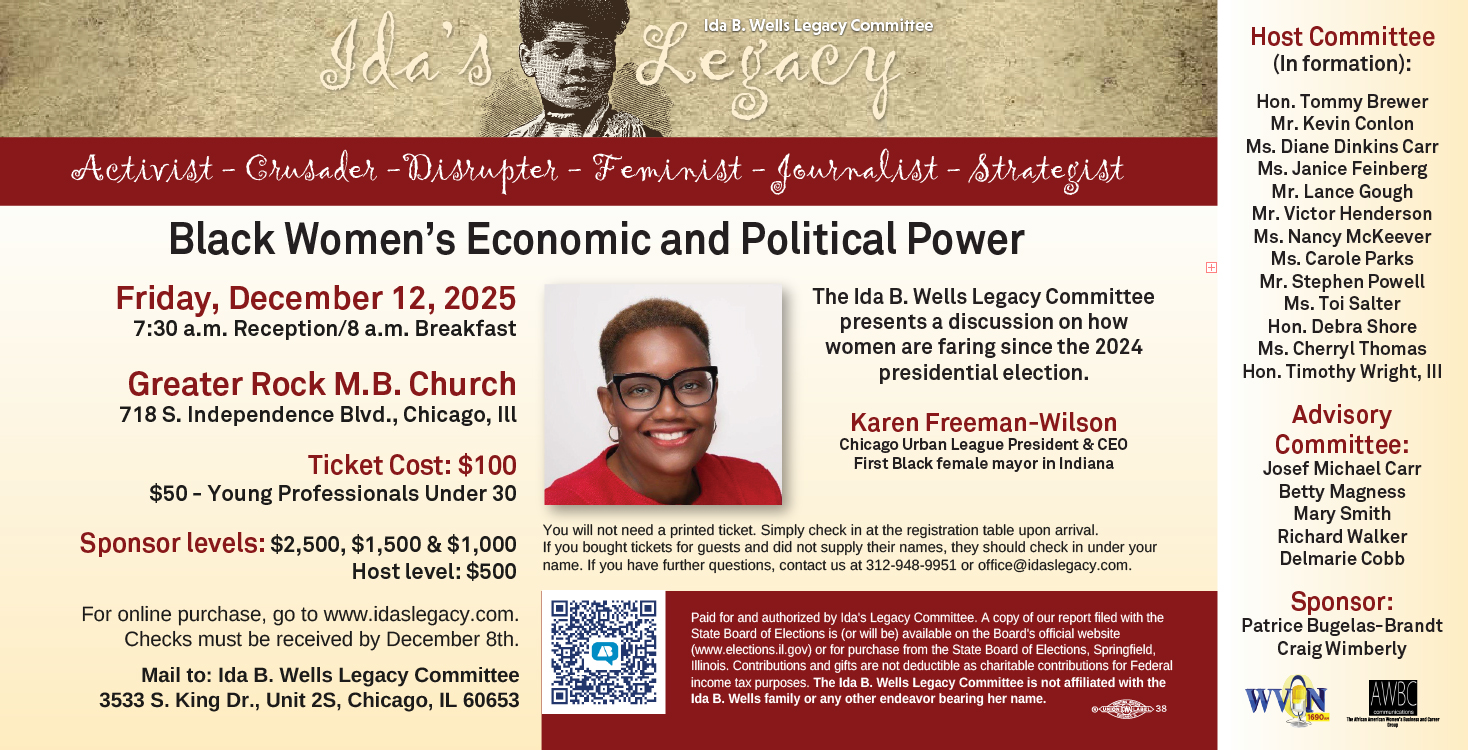
Achieving the American Dream for women seems to be getting further out of reach under President Donald Trump's Administration.
In a national poll of more than 2,000 registered voters, an alarming number of people report to skipping meals to save money, paying bills on credit cards, borrowing from friends and family and tapping into savings to make ends meet. On the surface, the experiences of both men and women are similar. Taking a closer look, however, women are experiencing an even greater threat to their economic security than men, across the board. Consequently, 53% of women compared to 44% of men are worried they could not cover an unexpected bill of $500 without having to borrow the money.
According to The Century Foundation poll, young women, between 18-34 years old, believe the American Dream is all but dead. The Trump Administration's policies are taking women backward through their anti-diversity and pro-discrimination efforts and attacks on reproductive rights after a half-century of making progress to close the gender and economic gap.
In 2025, women still make 85 cents for every dollar a man earns. For Black women, the wage gap is 66.5 cents and in Illinois, it is 56 cents, according to the National Partnership for Women & Families. This year, more than 400,000 Black women left the U.S. labor force. That is on top of the 518,000 Black women who never returned after the pandemic.
The DOGE cuts and the dismantling of DEI programs delivered a direct blow to Black women and in turn the economy. The government is the largest employer of Black people--especially, Black women, who make up over 12% of the federal workforce. These jobs offer stability, fair wages and pensions. They provide entry into the middle class--home ownership, educational opportunities and generational wealth.
More than 51% of Black households with children are headed by single mothers. When these women lose their jobs, entire families lose their economic lifeline. The entire U.S. economy also feels the ripple effects. According to experts, for every one point drop by women in the workforce, the gross domestic product loses an estimated $146 billion.
When that disproportionately impacts Black women, who are the breadwinners, caregivers and entrepreneurs, the loss is even greater. In other words, when Black women are pushed out of the labor force, we all lose.
Women pay a price for leaving the workforce and their families pay for it as well. Some people look at this as an issue that impacts women, but it's not an issue that only impacts women, it impacts their entire families," explains Karen Freeman Wilson, CEO of the Chicago Urban League. "For example, it may limit a student's extracurricular opportunities and because of those limitations, a child may not achieve their greatest potential."
Freeman Wilson says women pay dues, they pay tithes in church and they support philanthropic organizations, which means their loss of income impacts communities.
Wilson-Freeman will join the Ida's Legacy Black Women's Economic and Political Power Breakfast, Friday, Dec. 12, 2025 at Greater Rock Missionary Baptist Church, 718 S. Independence Boulevard, Chicago, Ill to discuss in-depth how women are faring under the current presidential administration. For ticket information, visit www.idaslegacy.com or call 312-948-9951.
Latest Stories
- NEW DOLTON FIRE CHIEF OFF TO GREAT START
- Audio Series “Meeting the Moment” Offers Communications Strategies to Local Nonprofit Leaders Navigating Crisis, Identity, and Change
- Hazel Crest Hosts Women’s Day Celebration
- Playwright Wants Musical To Be A Call To Innocence And Community
- Bowie State University Joins National Effort to Strengthen Career-connected Learning and Work
Latest Podcast
Everyone Has Assets