MAYOR BRANDON JOHNSON, DEPARTMENT OF STREETS AND SANITATION ANNOUNCE FIRST-EVER CITYWIDE COMPOSTING INITIATIVE FOR CHICAGO RESIDENTS
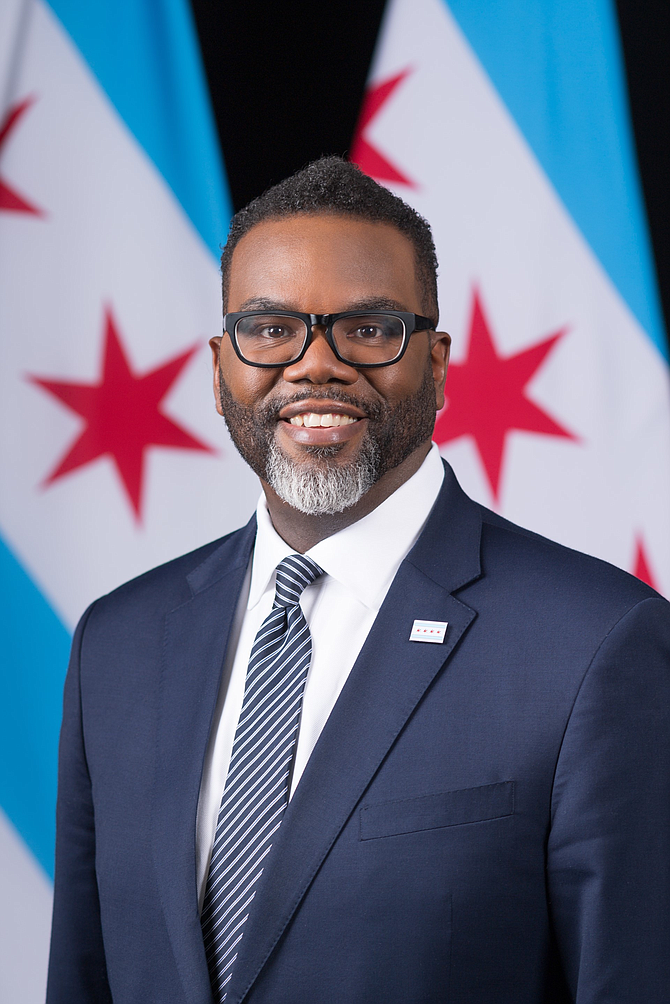
Mayor Brandon Johnson
New citywide Food Scrap Drop-Off program diverts waste from landfills and helps reduce harmful greenhouse gas emissions.
CHICAGO – Mayor Brandon Johnson and the Department of Street and Sanitation (DSS) announced its first-ever citywide composting initiative, a Food Scrap Drop-Off program, which allows all Chicago residents to bring their household food scraps to one of 15 locations throughout Chicago. To participate, residents sign up for a nearby drop-off location, collect in sealed containers, and bring the collected materials to the green carts at the drop-off sites. Upon collection, these materials are transferred to a composting facility, where food scraps are processed into compost, a valuable product that looks and smells like rich soil and can be used to improve soil health.
“Diverting food scraps for composting is one of the easiest and most impactful ways for individuals and cities to address the climate crisis,” said Mayor Brandon Johnson. “As we bring composting options to all Chicago residents, we can reduce harmful greenhouse gas emissions that occur when organic food material decomposes in a landfill, return organic materials to the earth, and most importantly, create healthier communities across our great city.”
The 15 food scrap drop-off sites are:
Morgan Park – 11059 S. Homewood Ave.
Englewood – 611 W. 69th St.
West Englewood – 1756 W. 74th St.
West Edelson – 3720 W. 55th St.
Grand Boulevard – 4352 S. Cottage Grove Ave.
Brighton Park – 3359 S. Maplewood Ave.
Near South Side – 1758 S. Clark St.
Lower West Side – 1944 W. Cullerton St.
West Town – 2505 W. Grand Ave.
Logan Square –2460 W Cortland.
Belmont Cragin – 5605 W. Grand Ave.
Avondale – 3143 N. Rockwell St.
Bowmanville – 5333 N. Western Ave.
Irving Park – 4605 W. Lawrence Ave.
Norwood Park – 6453 W. Higgins Ave.
“DSS has been working with city partners to bring composting to Chicago residents to help meet the City’s climate action plan and to increase its material diversion rate,” said DSS Commissioner Cole Stallard. “The department is grateful to have additional resources to carry out this initiative and we are fully committed to the program’s operations and success.”
All kinds of food scraps are accepted with the program, including meat, bones and dairy, as well as fruit and vegetable scraps and old leftovers. A full list of accepted and unaccepted items is available here.
“The Office of Climate and Environmental Equity applauds DSS for taking this important step in diverting food scraps from the waste stream and returning this organic waste to a productive reuse for compost,” said Angela Tovar, Chief Sustainability Officer for the City of Chicago. “We look forward to a continued partnership to realize a suite of policies and actions aimed at minimizing waste disposal and its negative environmental impacts, and maximizing more circular systems that allow Chicagoans to reroute items from landfills that can otherwise be reduced, reused, recycled or repaired.”
For more information on recycling and the Food Scrap Drop-Off program, including drop-off sites and where to sign up, please visit www.chicagorecycles.org and view educational video.
Latest Stories
- Aetna Better Health® of Illinois hosts statewide Style & Smile Barbershop Takeover
- CHICAGOANS AND THE STEPPIN WORLD MOURNS THE PASSING OF DJ SAM CHATMAN
- Clerk’s Office Expands Early Voting to 56 Locations in Suburban Cook County
- Department on Aging to Assist Older Adults During Medicare Open Enrollment Period
- Make Your Vote Count
Latest Podcast
Election Education