Chicago Will Expand Cop Body Camera Program

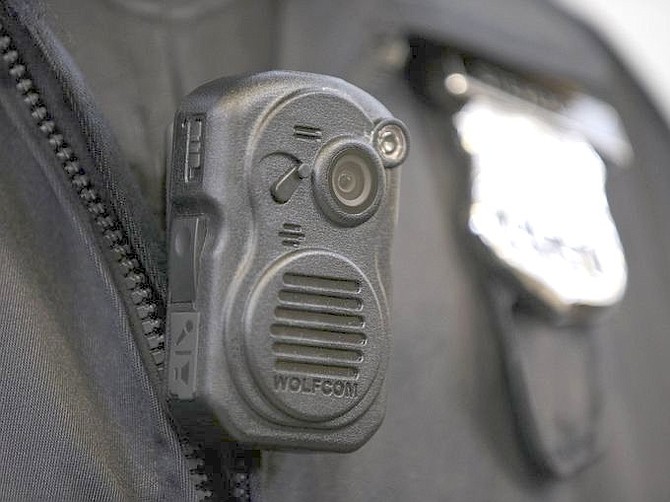
In the mist of protests over an officer’s shooting of an African American teen, Chicago Mayor Rahm Emanuel announced on Sunday that the city will expand its cop body camera program to six additional police districts by mid-2016.
“Improving public safety and making Chicago a safer city has been one of my highest priorities,” Emanuel said. “Expanding this successful program into one-third of the city will help enhance transparency and credibility as well as strengthen the fabric of trust that is vital between police and the community.”
The new test sites will be announced at a later date. But beginning in February, the Chicago Police Department will be purchasing next-generation cameras that can record up to 72-hours on a single charge, city officials said.
The cameras also can double as an in-vehicle recording device.
“Equipping every officer with a wearable camera device allows us to harness the power of technology to better serve the people of Chicago,” said then Chicago Police Supt. Garry McCarthy.
The current pilot program has been in effect since the beginning of this year. There are 30 test cameras in the Shakespeare District, which includes Logan Square, Bucktown and Wicker Park neighborhoods, as well as portions of Avondale and Humboldt Park neighborhoods.
Since the pilot program started, more than 4,600 videos have been captured totaling more than 745 hours.
Officials said officers are currently evaluating cameras for “routine calls for service, investigatory stops, traffic stops, emergency vehicle response and evidence collection.”
The newest program will be paid for with a $1.1 million grant from the U.S. Justice Department, matched with the same about of money in city funds. The police department also has applied for additional grants to assist with camera purchases and other costs tied to the program, officials said.
The announcement comes as protesters have hit Chicago streets over the police shooting of an African American teen.
On Nov. 24, Jason Van Dyke, a white Chicago Police officer, was charged with fatally shooting Laquan McDonald 16 times on Chicago’s Southwest Side. On the same day, the tape was released of Van Dyke shooting McDonald following a recent judge’s decision to make the tape available to the public.
The video sparked outrage and several protests, including a march “Black Friday” on the Magnificent Mile on Michigan Avenue. Portions of the street was shut down for hours.
“I don’t know what to make of the timing but this is a good thing,” said Marian Perkins, a former Cook County prosecutor who now chairs the criminal justice, political science and philosophy department at Chicago State University. “But I think that the march might have had some impact on the announcement. They were already in discussions on the camera. We want to make sure that they stay on.”
Latest Stories
- Howard Brown Health Marks National PrEP Day by Encouraging Whole-Person Approach to HIV Prevention
- MAYOR JADA D. CURRY CONTINUES TO PROPEL LYNWOOD INTO A TREMENDOUS DESTINATION POINT OF THE SOUTHLAND
- HIP-HOP LEGENDS SCARFACE, TOO SHORT AND DO OR DIE ARE COMING TO HARD ROCK LIVE NOV 20
- Good Soil Forum Returns to Award $500,000 to Entrepreneurs and Founders Ready for Growth
- Lisa Price, Tokyo Stylez, Olamide Olowe, Cornell McBride Sr. and More to Be Honored at 2026 Bronner Bros. Beauty Icon Awards
Latest Podcast
Learning To Live Life Correctly By Knowing Your Blood Type