Not Now, Not Ever

Not Now, Not Ever
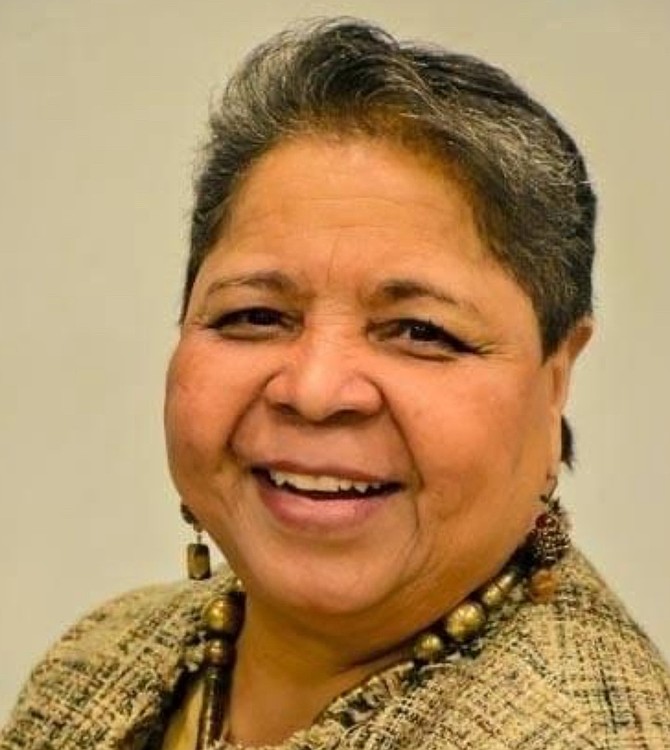
By Brenda “Bren” Sheriff, CSA
There is something happening in this country that too many of us are watching—but not responding to.
Rights are rarely taken away all at once. More often, they are narrowed quietly, adjusted incrementally, and redefined slowly—until one day, what was once permitted is no longer allowed—gone.
That is why this moment calls for attention, awareness, and personal responsibility.
For Black Americans, the right to vote and to participate fully in civic life is under attack—and it has never been secure without vigilance. The recognition of our rights, under the “banner of freedom” so proudly waved by others in this country, has always required struggle, sacrifice, and persistence. Even with the Constitution, its amendments, and landmark legislation like the Voting Rights Act of 1965 in place, those rights have continually required defense—most recently challenged by Supreme Court decisions that have weakened protections impacting the Black vote.
In recent years, key parts of that law have been diminished. Supreme Court rulings have removed federal oversight that once protected communities from discriminatory voting changes and have raised the burden of proving when access to the ballot is unfairly limited.
At the same time, we have seen changes across the country: the redrawing of legislative districts, stricter voter identification requirements, and shifts in polling access. These policies are often debated in terms of election integrity and fairness—but their real-world effect is this: they can make participation more difficult for some voters than others.
And that brings us to a hard truth: rights that are not exercised are rights that become vulnerable.
It is not enough to say, “We have the right.” The real question is—are we using it? And with recent Supreme Court decisions, how deeply will Black representation in legislative bodies across the country—especially in the U.S. House and Senate—be affected?
When individuals choose not to participate—whether by not voting, not staying informed, or not engaging in civic life—they create space for decisions to be made without their voice. That is not just absence. That is the transfer of power through silence. Too often, non-participation contributes to the erosion of civil rights for all.
No community can afford to give away its voice and expect to maintain influence or ensure fair treatment under the law.
Let’s be clear: we live in a constitutional republic. We elect representatives to act on our behalf. If we do not participate in selecting them, we weaken our own position in the process.
The bottom line is this: personal responsibility is where this conversation must begin. We cannot wait for organizations, leaders, or movements to carry the full weight of civic engagement. Each of us has a role. Each of us has a stake. Each of us must make a conscious decision to participate. That is the only way this constitutional republic will ever be great for all of us.
That means voting—not occasionally, but consistently.
It means paying attention to local elections, where decisions about schools, policing, taxes, and community investment are made. Do you know who your elected officials are? Do you understand their positions on the issues that matter to you? Are they voting in your interest?
Young people are watching us. They are learning not just from what we say, but from what we do. If they see disengagement, they will normalize it. If they see commitment—steady, informed, and intentional—they will carry that forward.
Civic participation must be taught, demonstrated, and reinforced. It is not automatic—it is cultivated.
We cannot assume the next generation will simply “pick it up.” They must be shown what it looks like to take responsibility for their rights—and to understand the consequences of neglecting them.
This is not about fear. It is about awareness.
This is not about politics as a game. It is about governance as a reality.
This is not about occasional action. It is about consistent participation.
The question before us is not whether the rights exist. The question is whether we understand how our government works—and whether we are using it effectively to protect those rights as intended in the Constitution, as amended.
It is a fact: what you do not understand, you cannot command. Scripture reminds us that for lack of knowledge, our people perish—and that we are to study to show ourselves approved.
We must educate ourselves and our communities—in our churches, organizations, families, and institutions. Civic education still exists, including through organizations like the NAACP, which has fought for civil rights for more than a century.
It is up to us to reach and teach the next generation the importance of voting—and supporting institutions like the NAACP that continue to help navigate this system through both litigation and education.
As my greatest teachers used to say, “It works if you work it.”
Let’s use our right to vote responsibly. We cannot afford to be shut out—not now, not ever. Now more than ever, we must all be registered to vote and, most importantly, understand what is at stake and how our vote can work for us—to ensure that America includes us as a priority, not an afterthought.
A “not now” can become a “not ever” for us.
THIS WEEK’S QUIZ: What are the names and offices held by elected officials who most impact your life and the lives of those whom you love? Did you vote for them?
Answer to last week’s quiz: Currently, $44,000 is the income level that 85% of a married couples’ Social Security benefits may become taxable.
For Questions or Help: 773-817-0601 or basheriff1@gmail.com
Disclaimer: The illustrations presented in this column are not, nor are they intended to be, legal, financial, or any other licensed professional advice, you should contact the licensed professional of your choice for advice on your individual situation.
Latest Stories
- HIP-HOP LEGENDS SCARFACE, TOO SHORT AND DO OR DIE ARE COMING TO HARD ROCK LIVE NOV 20
- Good Soil Forum Returns to Award $500,000 to Entrepreneurs and Founders Ready for Growth
- Lisa Price, Tokyo Stylez, Olamide Olowe, Cornell McBride Sr. and More to Be Honored at 2026 Bronner Bros. Beauty Icon Awards
- CHICAGO RESIDENTS WANT QUANTUM
- CCA ACADEMY BECOMES PART OF THE SOLUTION TO A NEIGHBORHOOD'S FOOD-ACCESS PROBLEM
Latest Podcast
An Educator School Closure Prospective