They’re Taxing Your Social Security—Here’s the Bottom Line

They’re Taxing Your Social Security—Here’s the Bottom Line
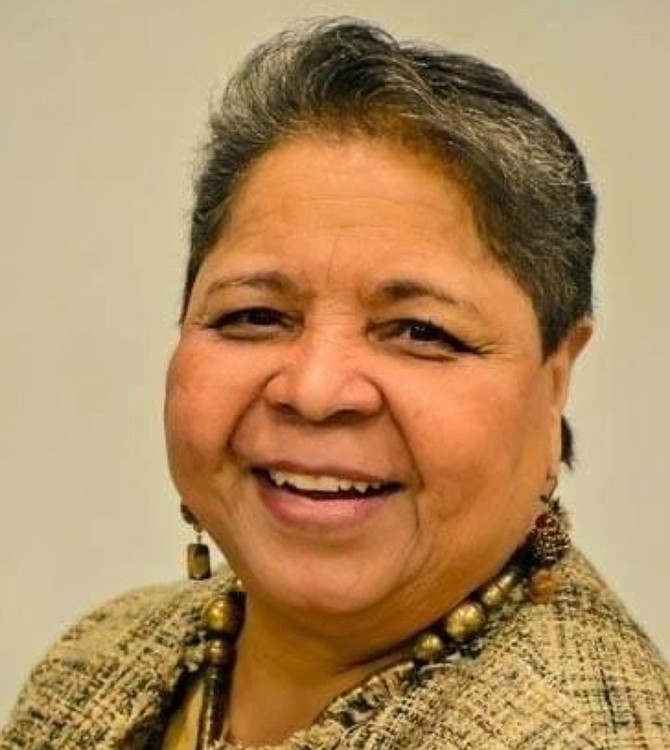
By Brenda “Bren” Sheriff, CSA
Let’s talk plainly this week, because too many retirees are being caught off guard.
You worked your whole life, paid into Social Security, and now you’re collecting your benefit—only to find out the government may be taxing it.
Yes, taxing it.
And for many of you, more than you expected.
Here’s the issue: the rules that determine whether your Social Security is taxed are outdated, and they have not kept up with today’s economy.
Under current law, your benefits may be taxed based on what is called your “combined income.” That includes your adjusted gross income, any tax-free interest, and half of your Social Security benefits.
If that number is more than $25,000 for a single person, or $32,000 for a married couple, you could pay taxes on up to 50% of your benefits.
If it rises above $34,000 (single) or $44,000 (married), then up to 85% of your benefits may be taxed.
Let me say that again—up to 85%.
Now here’s what makes this a problem: those income limits were set decades ago—in the 1980s and 1990s—and they have never been adjusted for inflation.
What does that mean in real life?
It means people who would have never paid taxes on their Social Security years ago are now paying them today.
You don’t have to be wealthy. You just have to have a little more income than expected.
A small pension. A part-time job. A required withdrawal from your retirement account. Any of those can push you over the line.
And once you cross that line, your tax bill can jump quickly.
This is what many experts call a “stealth tax.” It wasn’t raised directly—but more people are being pulled into it every year.
Now, there is some movement on this issue.
Lawmakers in Washington have discussed raising those income limits or even eliminating taxes on Social Security altogether. So far, nothing has passed—but the conversation is growing louder as more retirees feel the squeeze.
At the state level, there is some good news.
If you live in Illinois, your Social Security benefits are not taxed by the state. That’s a plus.
But federal taxes still apply, and that is where most of the impact is felt.
So what should you do?
First, pay attention to your income—not just how much you receive, but where it comes from.
Second, be strategic about withdrawals from your retirement accounts. Taking too much in one year can push you into a higher taxable range.
Third, understand that this doesn’t just affect your taxes. Higher income can also increase your Medicare premiums. So one decision can have a double impact.
And finally, don’t assume that because you are retired, your tax planning is over. In many ways, it’s just beginning.
Here’s the bottom line.
Social Security was designed to provide stability in retirement. But the tax rules surrounding it have changed the reality for millions of Americans.
If you don’t understand how those rules work, you could be giving more of your benefit back than necessary.
And in this season of rising costs, that is money you simply cannot afford to lose.
This column has always been about protecting your finances, your family, and your future.
Understanding how your Social Security is taxed is part of that protection.
Because it’s not just about what you receive.
It’s about what you keep.
THIS WEEK’S QUIZ: At what income level does up to 85% of your Social Security benefit become taxable for a married couple?
Answer to last week’s quiz: Medigap insurance is a private insurance policy purchased to cover the items (gaps) not covered under Medicare.
For Questions or Help: 773-817-0601 or basheriff1@gmail.com
Disclaimer: The illustrations presented in this column are not, nor are they intended to be, legal, financial, or any other licensed professional advice, you should contact the licensed professional of your choice for advice on your individual situation.
Latest Stories
- Aetna Better Health® of Illinois hosts statewide Style & Smile Barbershop Takeover
- CHICAGOANS AND THE STEPPIN WORLD MOURNS THE PASSING OF DJ SAM CHATMAN
- Clerk’s Office Expands Early Voting to 56 Locations in Suburban Cook County
- Department on Aging to Assist Older Adults During Medicare Open Enrollment Period
- Make Your Vote Count
Latest Podcast
Election Education