We, The People…

We, The People…
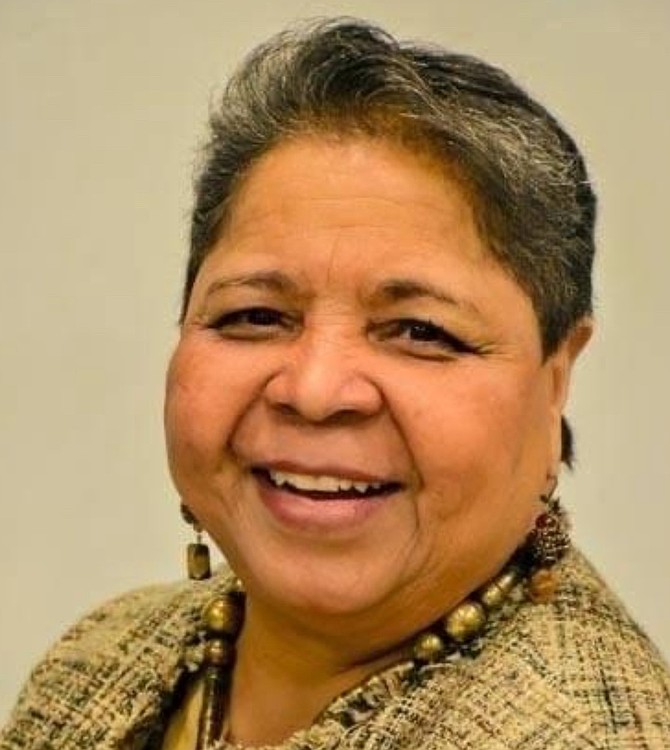
By Brenda “Bren” Collins-Sheriff, CSA
As a delegate to the 117th NAACP National Convention, I had the honor of representing the Chicago Southside Branch, one of the oldest branches of the NAACP, in our “Home sweet home, Chicago”.
The convention brought thousands of delegates, youth leaders, advocates, professionals, clergy and community members to Chicago from July 15 through July 22, 2026. Convened under the theme “We, The People,” it offered more than speeches, workshops and ceremonial gatherings. It challenged us to examine the condition of our democracy and the responsibility of a 117-year-old civil rights organization in a rapidly changing nation.
For me, the experience was both national and deeply personal. I was not simply attending an event. I was carrying the history, concerns and aspirations of the Chicago Southside Branch into a national assembly. Chicago has long been a center of Black political organizing, labor activism, cultural achievement and civil rights leadership.
Both Chicago Mayor Brandon Johnson and Illinois Governor J.B. Pritzker addressed the convention. Their presence underscored the importance of Chicago and Illinois to the continuing struggle for racial justice, voting rights and equal representation. Mayor Johnson reminded us that many of the issues discussed nationally are experienced daily in Chicago neighborhoods. Governor Pritzker emphasized that democracy can fulfill its promise only when every voice is heard, particularly the voices of those who have historically been silenced.
The theme “We, The People” was especially meaningful as the nation celebrates its 250th anniversary. Those familiar constitutional words have never automatically included everyone equally. Generations of NAACP members have fought to give them substance through litigation, legislation, protest, education and voter participation.
The convention reminded us that democracy is not self-executing. Rights must be protected, exercised and defended. Voting rights and preparation for the 2026 midterm elections were therefore among the convention’s most urgent priorities. Delegates were called upon to return home prepared to register voters and educate registered voters about the importance of participating in all elections, not only presidential contests.
The convention also provided practical educational seminars designed to strengthen the economic and physical well-being of our communities. One seminar taught participants the fundamentals of investing in the stock market. This was important because economic justice requires more than employment. It requires access to financial knowledge, investment opportunities, homeownership, entrepreneurship and the tools necessary to build and transfer generational wealth.
Another seminar examined the federal 340B Drug Pricing Program and the adverse consequences that can occur when pharmacies and other participating entities misuse the program. The program was intended to help qualifying healthcare providers stretch limited resources and make prescription drugs more affordable for low-income and underserved patients. Yet, as the seminar explained, when savings are retained without reaching the patients the program was intended to serve, poor people may continue to struggle to pay for necessary prescriptions. The discussion demonstrated why healthcare accountability must remain an essential part of the civil rights agenda.
Young people from across the nation, as they have been for the past 49 years, were again central to the convention. The National ACT-SO Competition showcased talented high school students in science, technology, business, humanities, culinary arts and the performing arts. Its return to Chicago was especially meaningful because ACT-SO was founded here by longtime Chicago journalist Vernon Jarrett.
The young competitors represented more than individual achievement. They represented the future of our great Association. If the NAACP is to remain strong for another century, young people must not merely be invited to attend. They must be mentored, trained and entrusted with meaningful leadership, as demonstrated by Bryan Hudson, chair of both the Chicago Southside Branch and Illinois State Conference ACT-SO programs.
One of the most significant events connected to the convention was the People’s Climate Summit, hosted at the University of Chicago’s David Rubenstein Forum in partnership with Earthjustice. The summit brought together environmental justice advocates, attorneys, policymakers, organizers and members of adversely affected communities.
Among its leaders was Katherine Egland, chair of the NAACP National Environmental and Climate Justice Committee. The summit also reflected the work of Abre’ Conner, director of the NAACP Center for Environmental and Climate Justice, who leads the Association’s national environmental justice initiatives.
The summit reinforced a central truth: Climate justice is civil rights work.
Environmental harm is not distributed equally. Black communities and low-income neighborhoods are more likely to experience poor air quality, contaminated water, industrial pollution, extreme heat and inadequate infrastructure. These conditions affect health, housing, education, property values and economic opportunity.
The summit also addressed the growing energy and water demands associated with artificial intelligence and data centers. Technology is often presented as progress, but progress cannot be measured only by corporate investment or technological capacity. We must also ask who benefits, who pays and which communities bear the environmental burdens.
Residents must be informed before projects are approved, not after decisions have effectively been made. Communities must have a meaningful voice in zoning, permitting, environmental review and development planning.
As a delegate from the Chicago Southside Branch, I left the summit thinking about how national policy connects to local responsibility. Climate justice concerns whether children breathe clean air, whether families have safe drinking water, whether seniors can survive extreme heat and whether neighborhoods have the power to shape their own futures.
What, then, should be expected of the NAACP at 117 years old? Not much if you do not join our ranks. Just as it takes a village to raise a child, it takes an army of willing warriors to win the wars waged on so many fronts. Just like back in the day, it takes single-minded people to work together to make the changes needed to help us all live happier, healthier, and more prosperous lives across this country that we built.
We must honor our history without becoming satisfied with it. Our legacy gives us credibility, but our present work determines our relevance. The NAACP must continue to advocate, agitate and litigate. It must also educate, organize and develop new generations of leaders.
For those of us who served as delegates, the convention did not end when the final session adjourned. We returned to our branches with a duty to report, educate and act.
I was proud to represent the Chicago Southside Branch. I returned from the convention reminded that we are heirs to a powerful legacy, but we are also responsible for its future. In the words of the Isley Brothers, “We’ve Got Work to Do”
At 117 years old, the NAACP is not being asked merely to remember what it has accomplished. It is being called upon to resolve the challenges before us and restore the promise of democracy for us, “We, the People.” “In the words of President Obama, “Yes, we can!”, but only if we ALL take on the responsibility doing our part.
THIS WEEK'S QUIZ: What is the oldest Black civil rights organization in our nation?
Answer to Last Week's Quiz: Mental health is a longevity issue. Improving life expectancy in the Black community requires treating emotional well-being as inseparable from cardiovascular health, chronic-disease prevention, economic security and access to quality healthcare.
For Questions or Help: 773-817-0601 basheriff1@gmail.com
Disclaimer: The illustrations and examples presented in this column are not, nor are they intended to be, legal, financial, tax, insurance, or other licensed professional advice. Readers should consult the licensed professional of their choice regarding their individual circumstances.
Latest Stories
- Howard Brown Health Marks National PrEP Day by Encouraging Whole-Person Approach to HIV Prevention
- MAYOR JADA D. CURRY CONTINUES TO PROPEL LYNWOOD INTO A TREMENDOUS DESTINATION POINT OF THE SOUTHLAND
- HIP-HOP LEGENDS SCARFACE, TOO SHORT AND DO OR DIE ARE COMING TO HARD ROCK LIVE NOV 20
- Good Soil Forum Returns to Award $500,000 to Entrepreneurs and Founders Ready for Growth
- Lisa Price, Tokyo Stylez, Olamide Olowe, Cornell McBride Sr. and More to Be Honored at 2026 Bronner Bros. Beauty Icon Awards
Latest Podcast
Learning To Live Life Correctly By Knowing Your Blood Type