Documentary Highlights The Influence Of West Africa Throughout The Diaspora
Documentary Highlights The Influence Of West Africa Throughout The Diaspora
By Tia Carol Jones
Toyin Ibrahim Adeyeke was inspired to create the documentary “Bigger Than Africa” about how enslaved West Africans brought their culture to the places where they were taken and how that culture is still present today while he was in film school.
Adeyeke was born and raised in Nigeria. In his final year at the Los Angeles Film School in Hollywood, he was deciding on what to do as his thesis film. He wanted the 30 minute- to 50-minute short film to reflect his culture, while being a Universal story that everyone could relate to.
While doing research, he learned about enslaved Africans in South Carolina. He took his film crew and when he got there, he was overwhelmed and knew it was bigger than a short film subject. Years later, he decided to make it a film documenting the transatlantic slave trade from Africa to the United States of America, Brazil, Cuba, Trinidad & Tobago.
“Bigger Than Africa” will air on public television stations, including WTTW Chicago. It will also be available on www.pbs.org and the PBS Video app for two years. The documentary has been shown at the United Nations and earned major recognition at the Charlotte Black Film Festival for Best Documentary, the International Houston Black Film Festival for Best Documentary and a nomination for Best Documentary at the African Movie Academy Award.
It took Adeyeke four years to shoot the documentary, which covers six countries, the United States of America, Brazil, Cuba, Trinidad & Tobago, the Republic of Benin and Nigeria. It includes interviews with people like Afrobeat musician and activist Femi Kuti, an Afrobeat Musician and Activist; Olusegun Obasanjo, the Former President of the Federal Republic of Nigeria; and Wole Soyinka, Nobel Laureate and Playwright.
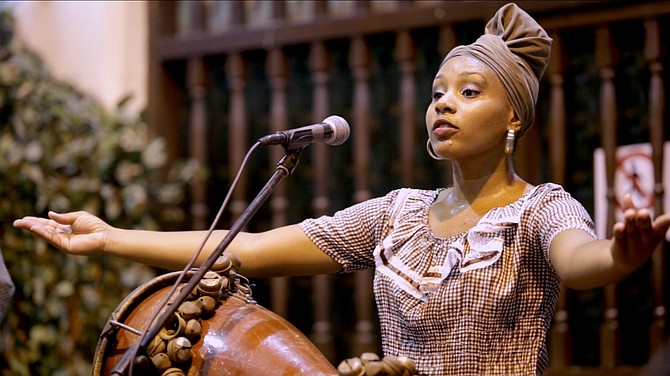
Adeyeke said there are a lot of similarities among people of African descent from country to country. He said while visiting the places in the documentary, he was able to see the ways the culture he was brought up in Africa had survived in the other places. He talked about attending events in places like Cuba and they started to sing songs and play the drums and he could understand it.
“That was really interesting to me, coming from Africa and hearing songs that have survived for over 400 years in the diaspora,” he said.
Adeyeke said it was emotional to film the documentary and have different experiences, but he said it was very much worth it. He said that he hopes the documentary is able to unify people across the African Diaspora. He said he tried to uniquely show the commonalities between the people of African descent.
“When you see Afro Brazilians talking about their ancestors and they’re claiming their ancestors came from Moyo and what they are practicing and doing right here, right now, was passed down to them from generation to generation, and they have been able to keep it going,” he said. “Now, you’re going to Trinidad and they’re telling you the same thing. It just shows that we’re an extension of each other, with different experiences.”
Adeyeke said that he is grateful to the audience for their positive response to the documentary. Everywhere the documentary has been screened it has been sold out. He said that it is great to see that kind of support for his project, from people and from film festivals.
For more information about Toyin Ibrahim Adeyeke and the Motherland Productions, visit www.motherlandproductions.com.
Latest Stories
- Clerk Mariyana T. Spyropoulos Warns Public About Scam Arriving by US Postal Service
- Post-Hearing Update: Cannabis Licensing Case — Names Raised in Open Court, Ruling Expected May 21
- Post-Hearing Update: Cannabis Licensing Case — Names Raised in Open Court, Ruling Expected May 21
- NEW DOLTON FIRE CHIEF OFF TO GREAT START
- Audio Series “Meeting the Moment” Offers Communications Strategies to Local Nonprofit Leaders Navigating Crisis, Identity, and Change
Latest Podcast
Everyone Has Assets