Let’s Just Do It

Let’s Just Do It
Last week I shared that I have been meeting with several of my colleagues—men and women who, like me, have spent decades in financial services. When we gather, there is one painful truth we almost always end up lamenting: our skills, experience, and professional knowledge are too often undervalued in our own community when compared to our white counterparts.
To be blunt, a person of another community who is a licensed financial services professional is often more likely to convince a Black family that they need a particular product or service—even when that same product or service had already been presented by a Black professional. Too often, the value of financial guidance is not rejected outright; it is simply not recognized when it comes from someone who looks like us.
I believe this mindset has deep roots. Many of us remember—or have heard stories about—the days when men of another community drove into Black neighborhoods wearing pressed suits and shiny shoes, collecting nickels and dimes for industrial insurance policies that frequently paid out less than what families had paid in. We should have learned by now that “they don’t’ always mean legitimate” and that “Black don’t always mean s**t”
I saw this scenario play out repeatedly earlier in my career. The brokerage firms I worked for distributed customer potential leads to their brokers. Time and again, it broke my heart to watch those colleague from another community close a sale with a Black client I had previously worked with—after that same client dismissed my advice and relegated my efforts to the recycle bin. The phenomenon is painful but real: many Black folks still believe that others provide better products, better deals, and better service even when purchased from the same source.
Yes—if it’s from the other community, it’s right. If it’s Black, it lacks.
I have read studies suggesting that lower self-esteem shows up at higher rates in Black communities than in others. In contrast, many other communities are quick to patronize their own and far less inclined to cross racial or ethnic lines when purchasing professional services. Unfortunately, our lack of confidence in doing business with one another is one of the major reasons Black dollars circulate for such a short time in Black communities.
There was a time—from the 1940s through the 1960s—when Black-owned businesses lined the commercial corridors of our neighborhoods. Unemployment was lower in part because those Black-owned, Black-patronized businesses hired us. After the passage of the Civil Rights legislation in the mid-1960s, those business corridors began to disappear across the nation. Urban renewal played a role, but a larger factor was psychological. Newly desegregated, Black consumers felt empowered to spend their money outside their communities—flooding once “the other community” businesses with Black dollars.
Many of us in financial services carry stories that still ache. We watched clients suffer needlessly—not because solutions didn’t exist, but because they did not trust the source. Some feared appearing uninformed. Others simply could not accept that a licensed Black professional might know more than they did. Too often, in our community, financial professionals are not viewed as an essential until they arrive wearing another face.
So why am I telling you this?
Because we, as Black Americans, are among the strongest, most influential, and resilient people on this earth. What other group has endured being stolen from their homeland, stripped of language and culture, robbed of labor, talent, and inventions—yet gone on to shape global culture? The world revels in our music, our language, our style, our athleticism, and our intellectual brilliance. Our achievements are vast and undeniable.
And yet, we lag behind in fully embracing the biblical directive found in Proverbs 13:22: “A good man leaves an inheritance to his children’s children.”
That inheritance is not just money. It is mindset. It is trust. It is the willingness to invest in one another.
So let us make a pledge—starting now, during Black History Month—to buy Black. If we want what other communities have, we must do what other communities do. They circulate their dollars among their own. If we made that same conscious effort, our grass would be greener, our water wetter, and our sense of Black pride stronger.
Let’s just do it – let’s get our houses in order and strengthen unity in our community. Wishing you an awe-inspiring, consciousness-raising Black History Month experience!
My best to you and yours,
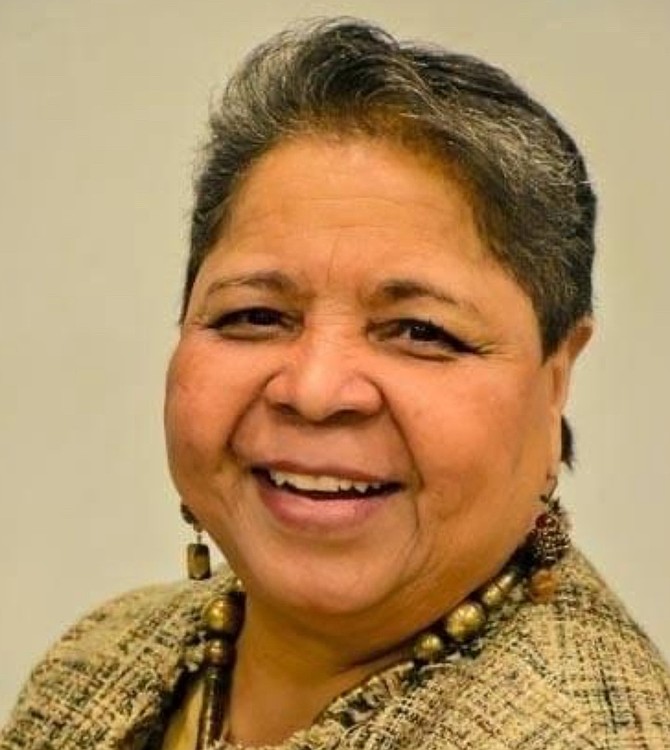
Bren Sheriff, CSA
THIS WEEK’S QUIZ: If your spouse or adult child is helping manage your money today, what happens to their authority the moment you become incapacitated?
Answer to last week’s quiz: A durable power of attorney (POA) for both financial and medical needs should be put in place as soon as a person has reached legal age, usually in their 20’s. It assures that there is someone authorized to make financial and medical decisions should the principal become incapacitated. A general POA, does not provide that assurance, its powers end at incapacitation.
For Questions or Help: 773-817-0601 or basheriff1@gmail.com
Disclaimer: The illustrations presented in this column are not, nor are they intended to be, legal, financial, or any other licensed professional advice, you should contact the licensed professional of your choice for advice on your individual situation.
Latest Stories
- Thirty Years of Runaway Property Taxes Demand Action
- New Ventra-Divvy Pilot Promotion
- NATIONAL CHERRY BLOSSOM FESTIVAL PARADE® RETURNS APRIL 11 TO WELCOME SPRING
- Illinois Department of Revenue Reminds Taxpayers of Postal Service Changes That May Affect Tax Filing Deadlines
- Giannoulias Hosting First-Ever Free Business Services Resource Fair to Support Illinois Small Businesses and Entrepreneurs
Latest Podcast
What Truth's Do You Need To Know