In Women’s Shoes, Pain Does Not Equal Gain
In Women’s Shoes, Pain Does Not Equal Gain
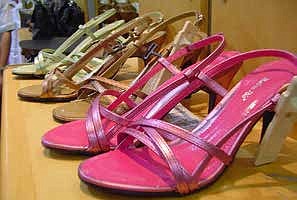
High-heeled shoes can make a woman feel beautiful, confident, sexy and powerful. They can also cause pain, deformities and a lifetime of damage to the feet. Doctors with the American College of Foot and Ankle Surgeons realize that most women won’t chuck their Jimmy Choos for sensible sneakers.
But surgeons say women can reduce their risks for foot problems, including surgery, by following three recommendations: Avoid shoes with pointed toes, avoid heels taller than two inches and recognize foot pain as a warning sign. High-heeled shoes crowd toes, force the body’s weight onto the ball of the foot and disrupt body alignment.
Potential consequences:
Bunions. High heels do not cause bunions. Most women who develop bunions can blame their ancestors for passing down a faulty foot structure. But over time, wearing pointed-toe high heels can make bunions worse. Only surgery can correct this often painful deformity. -
Hammertoes. High-heeled shoes that crowd the toes together can contribute to hammertoes. This deformity occurs when smaller toes become bent, like a claw. This can cause constant shoe friction, leading to painful corns. Severe hammertoes may require surgery to relieve pain.
Corns. Corns usually form from repeated pressure on the skin. Women with foot deformities, such as hammertoes, often suffer from corns because the tops of the bent toes rub against shoes.
Haglund’s deformity, or “pump bump.” Pump-style shoes often cause significant pain by irritating a bony deformity some women have on the back of their heel, called a “pump bump.” This problem is common in young women who wear high heels almost every day. In many cases, it can lead to blisters, bursitis or Achilles tendonitis.
Neuromas. Pointed-toe and highheeled shoes are the leading causes of painful neuromas in women. High-heeled shoes may force toes into the toe box, which can compress and swell nerves in the foot. Without treatment, a neuroma can lead to permanent nerve damage, making it difficult to walk without severe, shooting pain.
Back pain. That old song, “The leg bone’s connected to the thigh bone...The thigh bone’s connected to the hip bone...” tells the whole story. Wearing high heels disrupts ankle, knee, hip and lower back alignment. Most foot surgery patients are women. But not all highheel foot problems require surgery. Successful non-surgical treatments can include changes in shoe wear, padding, orthotics and pain medications. To learn more about foot pain, visit FootPhysicians.com. News USA
Latest Stories
- Howard Brown Health Marks National PrEP Day by Encouraging Whole-Person Approach to HIV Prevention
- MAYOR JADA D. CURRY CONTINUES TO PROPEL LYNWOOD INTO A TREMENDOUS DESTINATION POINT OF THE SOUTHLAND
- HIP-HOP LEGENDS SCARFACE, TOO SHORT AND DO OR DIE ARE COMING TO HARD ROCK LIVE NOV 20
- Good Soil Forum Returns to Award $500,000 to Entrepreneurs and Founders Ready for Growth
- Lisa Price, Tokyo Stylez, Olamide Olowe, Cornell McBride Sr. and More to Be Honored at 2026 Bronner Bros. Beauty Icon Awards
Latest Podcast
Learning To Live Life Correctly By Knowing Your Blood Type