Leaders Discuss The State Of Black America

by Thelma Sardin
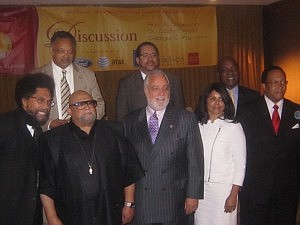
On Friday afternoon, several prominent Black leaders from religious, political and educational backgrounds discussed the state of Black America during the National Leaders Forum at the NNPA Annual Convention. The distinguished panelists included Rev. Jesse L. Jackson, Sr., Dr. Michael Eric Dyson, Dr. Cornel West, Dr. Maulana Karenga, NNPA Chairman Danny Bakewell, Sr., Rev. Marcia L. Dyson and Dr. Benjamin Chavis.
Charles Ogletree, Harvard Law professor and director of the Charles Hamilton Houston Institute for Race and Justice moderated the forum.
The events theme centered on the many disparities Black America faces. The group of intellectuals stated their positions on what needs to be done to reclaim the Black community.
Rev. Jackson began the forum discussion acknowledging the peril that Black America faces.
The misery index in Black America is rising. Enthusiasm is dropping. Newspapers are falling off, radio stations are falling off, black banks are closing, black insurance companies are in trouble, he said.
Jackson also described how the expansion of the Prison-industrial complex in America.
Prison-industrial complex is a term used to attribute the proliferation of the US inmate population to the political influence of private prison companies and businesses that supply goods and services to government prison agencies.
There are 1.2 million Blacks in prison, 500,000 Latinosweve built an entire industry off our backs, Jackson said. The biggest growth in the economy is prison labor, he added.
African Americans need to be more vigilant to solve their problems according to Rev. Dyson.
We need a day of presenceour value is only recognized when we show up and show out, she said. Dyson elaborated that the only way Blacks will be taken seriously is if they began to draw a stronger presence in their communities.
In addition, Dyson believes Blacks have always been the driving force in ethical progression of the human race.
African Americans whether we are involved or not have always been the moral compass and barometer for other communities in society. We have a responsibility to evolve humanity, she said.
Dyson added that it is important for Blacks to recognize they are not only American citizens but global citizens.
She added that as global citizens Blacks have to watch how they deplete or help Africas economy.
We got African negroes wearing kente cloth that was made in Taiwan. Dyson added that not supporting African businesses diminishes the continents commerce.
Dr. Maulana Karenga, creator of the Kwanzaa holiday presented a fiery position.
What Black needs more than anything else seems to me is to break beyond the catechism of impossibility. People tell us what we cant do, what we havent done. People dont realize even when we praise our tradition we go back and we tear it down.
Karenga also added that it is important for Blacks identify what they can achieve.
Weve got to talk about what is possible as well as what is wrong. If we dont do that and we give greater weight to pathology then we duplicate the instructions of our oppressor.we have to have a clear conception of who we are.
Latest Stories
- Howard Brown Health Marks National PrEP Day by Encouraging Whole-Person Approach to HIV Prevention
- MAYOR JADA D. CURRY CONTINUES TO PROPEL LYNWOOD INTO A TREMENDOUS DESTINATION POINT OF THE SOUTHLAND
- HIP-HOP LEGENDS SCARFACE, TOO SHORT AND DO OR DIE ARE COMING TO HARD ROCK LIVE NOV 20
- Good Soil Forum Returns to Award $500,000 to Entrepreneurs and Founders Ready for Growth
- Lisa Price, Tokyo Stylez, Olamide Olowe, Cornell McBride Sr. and More to Be Honored at 2026 Bronner Bros. Beauty Icon Awards
Latest Podcast
Learning To Live Life Correctly By Knowing Your Blood Type