Tax Cut Package Gains Momentum


by Thelma Sardin
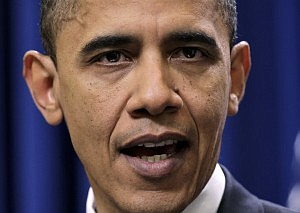
In what followed as the next step in an attempt to resolve the issue over tax cuts in America, on Monday evening, the Senate held a procedural vote to advance the tax deal President Obama made with Republicans.
The progression of the compromise in the Senate is creating tension for dissenting House Democrats. According to reports, the bill could make it to the House by midweek. Among House Democrats that are unenthusiastic about the compromise is Congressman Jesse Jackson, Jr.
In a recent e-mail statement to the Citizen, Jackson voiced concerns regarding the outcome of the Senate vote. "Unfortunately, the Senate's vote opens the door for a bad deal to be pushed through. Giving a tax break to people who make hundreds of thousands of dollars would only drive up the deficit, and empower next year's Republican Congress to cut important programs for the most vulnerable. Jackson continued with historical examples. Under President Reagan, Republicans drove up deficits through tax cuts and military spending as a deliberate strategy to force cuts in social programs. If this tax deal is passed, it will have the same functional effect, and government programs will be cut at a time when they are needed the most...I remain opposed to this tax compromise and I hope that House Democrats will not play into the Republican strategy."
Congressman Bobby Rush is in concurrence with Jackson. I disagree with the proposal, and do not think it is sound policy for ordinary working and unemployed families, he stated in an e-mail to the Citizen. Rush also said that the House Leadership has indicated, that they will continue to negotiate with the White House and Senate on taxes this year. I do not know how any changes or amendments will look, but I am hopeful that it places more emphasis on the unemployed and working class Americans, and less emphasis on the top 2% of earners in this country. Rush was not sure when the compromise will reach the House but said, I do believe we will complete a tax measure before the end of this year.
The Congressional Black Caucus (CBC) recently opposed the tax cut package. Rush, a member of the CBC explained the groups reasoning behind the opposition.
The House passed a Resolution that warned that we would not pass a tax measure resembling the White House/Senate proposal without major changes. The resounding sentiment from the CBC and the House has been that the proposal presents egregious concerns for ordinary Americans, and that the proposals priorities are placed with the segment of the taxpaying population who needs relief the least.
On last week, Democrats came out to publicly denounce Obamas tax cut agreement but by Friday, December 10, the President was getting strong support from former President Bill Clinton who came to Obamas defense at a White House press conference where he said, the bargain is, the best bipartisan agreement we can reach to help the largest number of Americans, and to maximize the chances that the economic recovery will accelerate and create more jobs, and to minimize the chances that it will slip back
Also last week, the Obama Administration took Americans back to school in an effort to clearly explain the tax cut package. Online at WhiteHouse.gov, Austan Goolsbee, Chairman of the Council of Economic Advisers, with the aid of a white dry erased board deconstructed the tax cut package and the purpose it serves for middle class Americans. [The] Obama Administration wanted to extend tax cuts on the first $250,000 of incomethe Republicans wanted a priority to extend tax cuts for very high income people, said Goolsbee. Ultimately, Republicans wanted to seize tax cuts for the middle class to push forward tax breaks for the wealthy, Goolsbee said.
According to Goolsbee, with tax cuts expiring on Jan.1, Obama had to find a way for taxes not to increase by thousands of dollars for the middle class. Among the benefits Obama bargained are extension of unemployment insurance, Earned Income Tax Credit, American Opportunity Tax Credit, Child Tax Credit, investment incentive and a substantial cut in payroll tax credit. The American Opportunity Tax Credit is a break for parents with children attending college. The payroll tax credit cut would save the working class almost $1,000 a year. The investment incentive is for corporations to build factories and bring more jobs to America. These things are the key to short run recovery of the economy and getting the growth rate up, said Goolsbee.
Lisette Livingston contributed to this story
Latest Stories
- Rotary Clubs Unite for the World’s Largest Polio Walk on World Polio Day
- The Inner Circle acknowledges Asia Alexus Alexander as a Pinnacle Professional of The Year
- Illinois DCFS, IDPH and Safe Kids Illinois partner with public transit agencies across Illinois to promote Infant Safe Sleep Awareness Month
- Main Stage Improv Brings Halloween Comedy Spooktacular to Tinley Park
- University of Chicago Medicine to expand in Northwest Indiana with 43,500-square-foot medical care facility in Valparaiso
Latest Podcast
Learning To Live Life Correctly By Knowing Your Blood Type